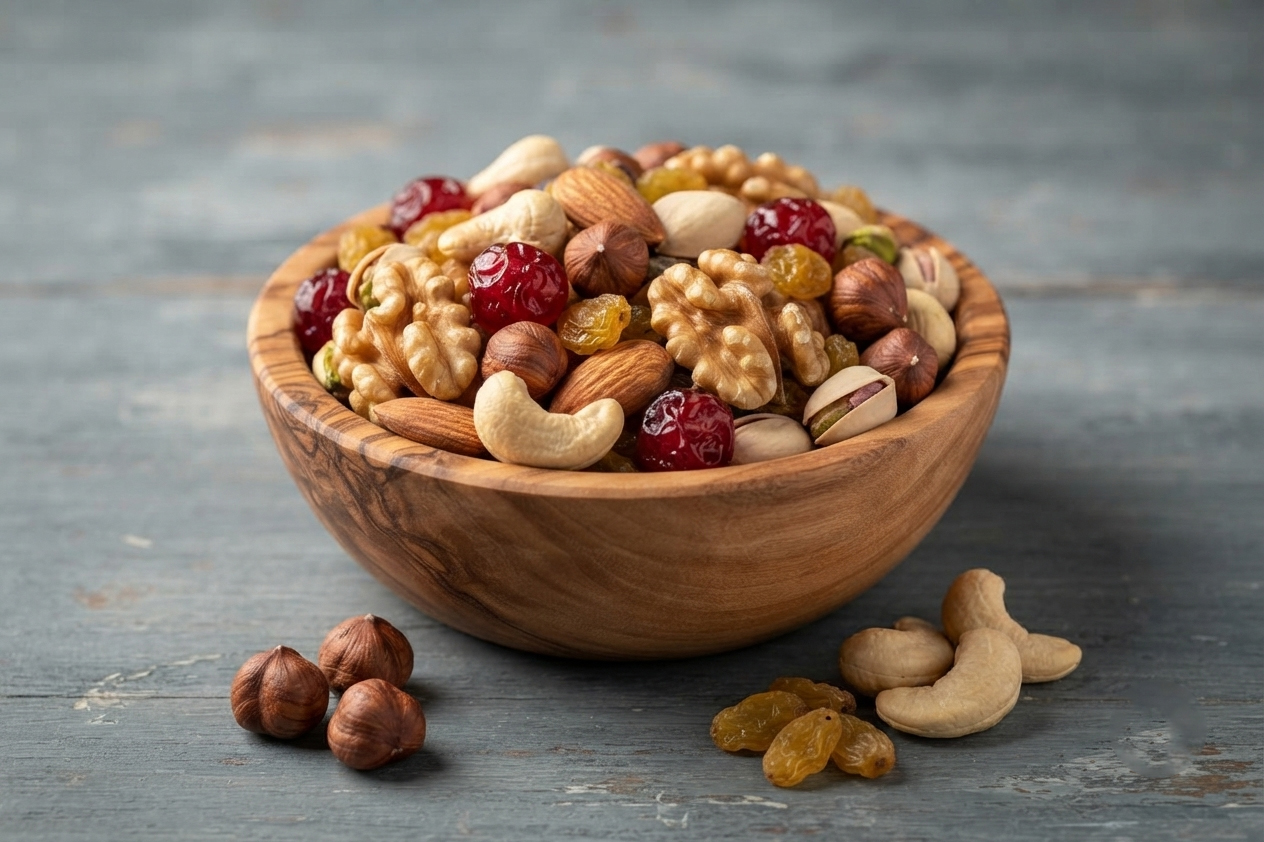
Pregnant women can safely include almonds, dates, walnuts, figs, pistachios, and raisins in their daily diet — in moderate amounts — to support the baby's growth, boost energy, and prevent common issues like constipation and iron deficiency. Dry fruits are one of the easiest ways to add natural nutrition to a pregnancy diet, but knowing which ones to eat, how much, and when matters just as much as choosing the right variety.
This guide covers the best dry fruits for pregnant women, trimester-wise recommendations, dry fruits to avoid, and answers to the most common questions expecting mothers ask.
Why Dry Fruits Are Important During Pregnancy
Pregnancy increases the body's need for iron, calcium, folate, fiber, and healthy fats. Dry fruits are naturally rich in these nutrients and make a convenient, non-processed snack option. Unlike packaged snacks, dry fruits provide steady energy without added sugar or preservatives, which is especially useful during the fatigue and food-aversion phases many women experience.
Best Dry Fruits for Pregnant Women
Almonds (Badam) — Rich in vitamin E, magnesium, and healthy fats, almonds support the baby's brain development and help manage cholesterol levels. Soaked almonds are easier to digest and are commonly recommended over raw almonds during pregnancy.
Dates (Khajoor) — Dates are high in natural sugars, fiber, and iron. Many nutritionists suggest eating dates in the last trimester, as they are traditionally associated with easing labor, though this should not replace medical guidance.
Walnuts (Akhrot) — A good source of omega-3 fatty acids, walnuts contribute to the baby's brain and nervous system development.
Figs (Anjeer) — Figs are naturally high in fiber and help relieve constipation, a common complaint during pregnancy. They also provide calcium and iron.
Pistachios (Pista) — Pistachios offer protein, fiber, and antioxidants, and make a filling snack that helps control unnecessary weight gain.
Raisins (Kishmish) — Raisins are a good source of iron and can help prevent pregnancy-related anemia when eaten in controlled amounts.
Trimester-Wise Dry Fruits Guide
First trimester: Focus on almonds and walnuts for folate and healthy fats, which support early fetal development. Small quantities are best if morning sickness makes eating difficult.
Second trimester: This is when calcium and iron needs rise. Figs, raisins, and dates can be added gradually to support bone development and prevent anemia.
Third trimester: Dates are commonly recommended in the final weeks. Continue almonds and walnuts, but keep portions moderate as calorie needs shift.
How Many Dry Fruits to Eat Daily During Pregnancy
A general guideline is a small handful (around 30 grams) of mixed dry fruits per day — for example, 4–5 almonds, 2–3 walnuts, and 2–3 dates. Eating too many at once can lead to excess calorie intake or digestive discomfort, so moderation is key.
When Dry Fruits Are Best to Eat While Pregnant
Dry fruits are best consumed as a midmorning snack or in the morning on an empty stomach, when digestion is at its peak. Soaking almonds and walnuts overnight makes them easier on the stomach and enhances nutrient absorption.
Dry Fruits to Avoid During Pregnancy
Not all dry fruits suit every pregnancy. Women with a history of nut allergies should avoid tree nuts entirely. Dry fruits high in natural sugar, such as dates and raisins, should be limited for women with gestational diabetes. Excess consumption of any dry fruit can also contribute to unwanted weight gain, so portion control matters more than elimination.
A Note on Consultation
Every pregnancy is different, and nutritional needs can vary based on individual health conditions such as gestational diabetes, allergies, or existing medical advice from a doctor. This guide is meant for general awareness and should not replace personalized medical advice. Always consult your gynecologist or a registered dietitian before making significant changes to your pregnancy diet, especially if you have any pre-existing health conditions.
Frequently Asked Questions
Can I eat cashews during pregnancy? Yes, cashews are generally safe during pregnancy in moderate amounts. They provide healthy fats, magnesium, and protein, but should be eaten in limited quantities due to their calorie density.
How many almonds should I eat daily during pregnancy? Most nutritionists recommend around 4–6 soaked almonds per day, though this can vary based on individual dietary needs — it's best to confirm with your doctor.
Are too many dry fruits harmful during pregnancy? Yes, eating dry fruits in excess can lead to unnecessary calorie intake, digestive issues, or blood sugar spikes, particularly with dates and raisins. Moderation is important.
Which dry fruits are best avoided when pregnant? Women with nut allergies should avoid tree nuts. Those with gestational diabetes should limit high-sugar dry fruits like dates and raisins, and always check with a doctor for personal risk factors.
Does eating dates help with normal delivery? Dates are traditionally believed to support easier labor when eaten regularly in the third trimester, and some studies suggest a possible link to cervical ripening. However, this varies by individual and should be discussed with a doctor rather than relied upon as a guarantee.
This material should only be used for informational purposes and should not be used as a replacement for expert medical advice. Please consult your doctor or a certified nutritionist for guidance specific to your pregnancy.
 Continue with Google